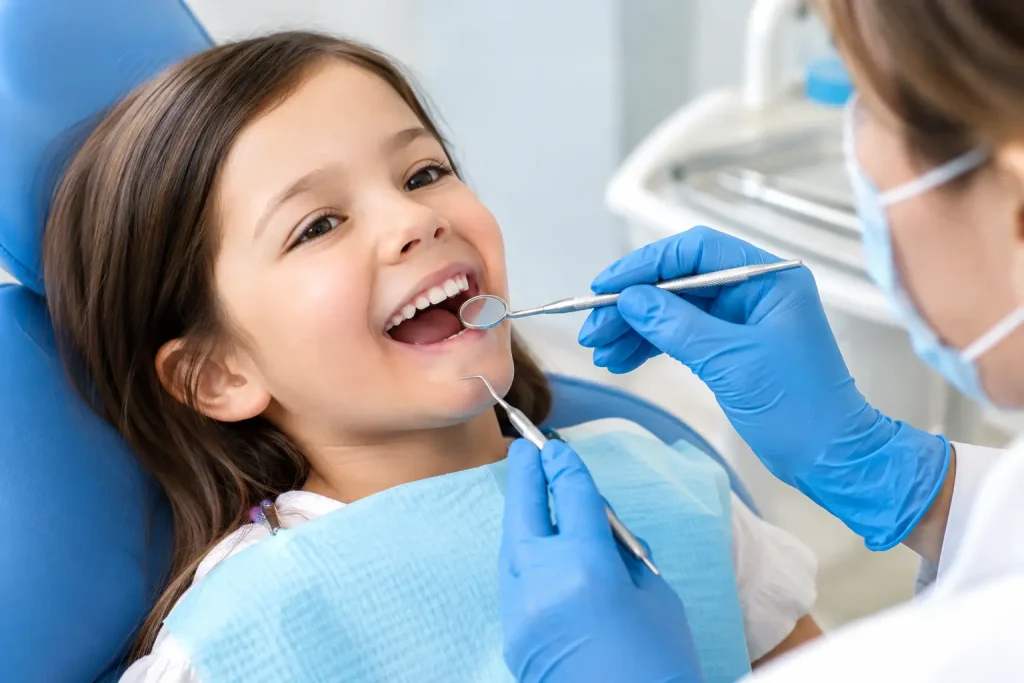
A child’s first permanent molars can look healthy at a glance and still be difficult to keep clean. Their chewing surfaces have narrow grooves where food and bacteria can settle, even when your child is brushing carefully. Kids dental sealants offer a simple way to shield those high-risk areas before a cavity has a chance to start.
For families, this is one of the easiest preventive treatments in dentistry. It is quick, comfortable, and designed to protect teeth that will need to last for decades. At Ventura Bright Dental, we explain every step in plain language so children and parents know what to expect.
What Are Kids Dental Sealants?
A dental sealant is a thin, protective coating placed on the chewing surface of a back tooth. It flows into the natural pits and grooves of the tooth, then hardens into a smooth barrier. This makes the surface easier to clean and helps keep cavity-causing bacteria away from the enamel.
Sealants are most often used on permanent molars and premolars. These are the teeth that do the heavy work of chewing, and they tend to have the deepest grooves. A toothbrush can clean the flat areas of a tooth well, but its bristles may not fully reach the bottom of those narrow grooves.
Sealants do not change how a tooth looks in a noticeable way. They are usually clear, white, or lightly tinted, and they sit only on the chewing surface. Your child can eat, speak, and smile normally right after treatment.
Why Back Teeth Need Extra Protection
Many cavities in school-age children begin in the back teeth, not because a child is doing anything wrong, but because molars are harder to clean. They are farther back in the mouth, can be challenging for small hands to reach, and have a more detailed surface than front teeth.
The first permanent molars often come in around age 6, followed by second permanent molars around age 12. These teeth can be especially vulnerable soon after they erupt. Children may still be learning consistent brushing habits, and a newly erupted molar may not sit fully above the gumline at first, which can make cleaning even more difficult.
Fluoride toothpaste and professional fluoride treatments strengthen tooth enamel, but they work differently from sealants. Fluoride helps the entire tooth resist decay. Sealants physically cover the deep grooves where decay often begins. For many children, using both is a practical way to build stronger protection.
Who May Benefit Most?
Children and teens with deep grooves in their molars are often good candidates. Sealants can also be helpful when a child has already had a cavity, has a history of frequent snacking or sugary drinks, or finds it difficult to brush thoroughly on their own.
That said, sealants are not automatically necessary for every tooth or every child. During a routine exam, the dentist looks at the shape of the teeth, your child’s cavity risk, and whether there are any signs of early decay. If a tooth already has a cavity, it may need a filling instead of a sealant. The goal is not to add treatment unnecessarily. It is to choose the right level of protection for your child’s needs.
What Happens During a Sealant Appointment?
Parents often worry that anything involving a child’s teeth will be uncomfortable. Placing a sealant is usually one of the simplest visits a child can have. In most cases, there are no needles, drilling, or numbing required.
The dental team first cleans and dries the tooth. A gentle conditioning solution is placed on the chewing surface for a short time so the sealant can bond securely. The tooth is rinsed and dried again, then the liquid sealant is painted into the grooves. A curing light hardens it within seconds.
The appointment typically takes only a few minutes per tooth. Your child may notice the dental light and the taste of the materials, but they should not feel pain. A calm, encouraging approach matters, especially for children who are new to dental visits or feel nervous in the chair.
How Long Do Dental Sealants Last?
Dental sealants can last for years, but they are not permanent. Normal chewing, teeth grinding, and wear can gradually chip or thin the material. The good news is that sealants are checked during regular dental exams and can often be repaired or replaced easily if needed.
A sealant also does not mean a tooth is immune to cavities. The sides of the tooth and the space between teeth remain exposed. Your child still needs to brush twice a day with fluoride toothpaste, floss where teeth touch, drink water often, and see the dentist for regular cleanings and exams.
Think of a sealant as an added layer of protection, not a substitute for daily care. It is particularly useful during the years when permanent molars are new and brushing routines are still becoming second nature.
Are Kids Dental Sealants Safe?
Dental sealants have been used for many years and are widely recognized as a safe preventive option for children. Parents may have questions about the materials used, and those questions deserve a clear answer. The amount of BPA-related exposure associated with sealants is extremely low, especially compared with everyday sources such as food packaging and household items.
The more immediate risk to consider is tooth decay. A cavity can lead to sensitivity, pain, missed school, more complex treatment, and worry for the whole family. For a child with deep molar grooves or a higher cavity risk, a sealant can be a conservative way to reduce that risk before drilling or fillings become necessary.
If you have concerns about allergies, materials, or your child’s health history, share them before treatment. A dentist can help you weigh the benefits for your child and answer questions without pressure.
Sealants, Fillings, and Other Preventive Care
A sealant is placed on a healthy tooth or a tooth with grooves that are at risk for decay. A filling is used after decay has already damaged part of the tooth. This difference matters because prevention is generally simpler, more comfortable, and less costly than treating a cavity after it grows.
Still, a sealant is not the answer to every concern. If a tooth has pain, visible dark spots, food getting stuck in a broken area, or sensitivity to cold or sweets, it needs an exam. A dentist may recommend a filling, fluoride treatment, or another option based on what is happening inside the tooth.
Regular checkups help catch small changes early. Digital X-rays, when appropriate, can show cavities between teeth or below the surface that cannot be seen during a visual exam alone. This gives parents a clearer picture of their child’s oral health and avoids guessing.
Making Preventive Visits Easier for Children
Children take cues from the adults around them. Before a sealant visit, it can help to describe the appointment simply: the dentist will clean the tooth and paint on a protective shield. Avoid promising that nothing unusual will happen, since every child experiences a visit differently. Instead, reassure them that the dental team will explain each step and that they can ask for a break if they need one.
Bringing a favorite comfort item, scheduling at a time when your child is usually rested, and keeping the conversation positive can make a real difference. For families who speak Spanish or Farsi, clear communication in a familiar language can also help a child feel more secure.
Coverage varies by plan, but many dental insurance plans include sealants for children because they are preventive care. If your family is uninsured or has questions about costs, asking for an estimate before treatment can make planning easier.
A small protective coating placed at the right time can spare a child from a much bigger dental problem later. When your child’s permanent molars come in, a routine exam is a good opportunity to see whether sealants could help keep those new teeth healthy and comfortable.